
Research Library
Explore the research for yourself. Each article includes a short summary, a link to read the full study, and a ready to use citation.
No articles match that search. Try a different keyword.
Epidural Analgesia
4 articles
Tan et al. (2023)
Automated mandatory bolus versus basal infusion for maintenance of epidural analgesia in labour
This article evaluates the administration of epidural medication via automated doses in contrast to continuous infusion. The use of automated doses led to a decrease in episodes of breakthrough pain and overall medication usage, potentially enhancing maternal satisfaction.
Cite (APA)
Tan, H. S., Zeng, Y., Qi, Y., Sultana, R., Tan, C. W., Sia, A. T., Sng, B. L., & Siddiqui, F. J. (2023). Automated mandatory bolus versus basal infusion for maintenance of epidural analgesia in labour. Cochrane Database of Systematic Reviews, 2023(6), Article CD011344. https://doi.org/10.1002/14651858.CD011344.pub3
Kearns et al. (2024)
Epidural analgesia during labour and severe maternal morbidity: Population based study
This study explores the association between epidural analgesia during labor and serious maternal complications. The findings indicated that the use of epidurals was connected to a reduction in severe complications, although the study is unable to confirm that epidurals were the direct cause of this decrease
Cite (APA)
Kearns, R. J., Kyzayeva, A., Halliday, L. O. E., Lawlor, D. A., Shaw, M., & Nelson, S. M. (2024). Epidural analgesia during labour and severe maternal morbidity: Population based study. BMJ, 385, Article e077190. https://doi.org/10.1136/bmj-2023-077190
Ugarph Edfeldt et al. (2025)
Pharmacological pain relief and women’s birth experience: A systematic review
This article examines the use of pain medications, including epidurals, relate to women’s satisfaction with their childbirth experience. Differences in study methods and quality prevented the researchers from reaching a firm conclusion about whether these medications improve the overall birth experience.
Cite (APA)
Ugarph Edfeldt, M., Gustavsson, H., Hildén, K., Cao, Y., & Backman, H. (2025). Pharmacological pain relief and women’s birth experience: A systematic review. BMC Pregnancy and Childbirth, 25, Article 505. https://doi.org/10.1186/s12884-025-07602-3
Lu et al. (2024)
Effects of epidural analgesia on intrapartum maternal fever and maternal outcomes: An updated systematic review and meta-analysis
This article investigates the impact of epidural analgesia on maternal fever, the duration of labor, and delivery outcomes. The review revealed that epidural use was linked to prolonged labor and a higher incidence of maternal fever, with no significant difference in cesarean section rates when compared to groups that did not receive epidurals
Cite (APA)
Lu, R., Rong, L., Ye, L., Xu, Y., & Wu, H. (2024). Effects of epidural analgesia on intrapartum maternal fever and maternal outcomes: An updated systematic review and meta-analysis. The Journal of Maternal-Fetal & Neonatal Medicine, 37(1), Article 2357168. https://doi.org/10.1080/14767058.2024.2357168
Nonpharmacological Pain Relief and Labor Support
4 articles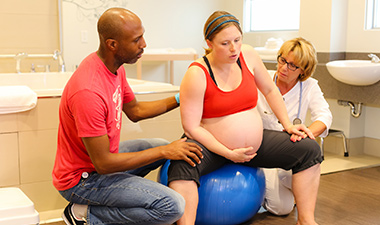
Fleet et al. (2024)
Antenatal education incorporating complementary medicine techniques for labour and birth to reduce the rates of epidural in primiparous women: A randomised control trial
This research investigated whether educating expectant mothers about complementary pain relief techniques prior to childbirth could lead to decreased epidural usage and enhanced birth outcomes. Women who participated in the educational sessions reported feeling more confident regarding the childbirth process, but the variations in epidural usage and birth results were not statistically relevant.
Cite (APA)
Fleet, J.-A., Adelson, P., McKellar, L., & Steen, M. (2024). Antenatal education incorporating complementary medicine techniques for labour and birth to reduce the rates of epidural in primiparous women: A randomised control trial. Midwifery, 139, Article 104170. https://doi.org/10.1016/j.midw.2024.104170
Nori et al. (2023)
Non-Pharmacological Pain Management in Labor: A Systematic Review
This article provides an overview of nonpharmacological approaches for managing labor pain, such as massage, breathing techniques, water immersion, movement, and positioning. It discusses how these methods may assist patients in handling pain and endorses their application as part of personalized labor care
Cite (APA)
Nori, W., Kassim, M. A. K., Helmi, Z. R., Pantazi, A. C., Brezeanu, D., Brezeanu, A. M., Penciu, R. C., & Serbanescu, L. (2023). Non-Pharmacological Pain Management in Labor: A Systematic Review. Journal of Clinical Medicine, 12(23), 7203. https://doi.org/10.3390/jcm12237203
Chang et al. (2022)
Effects of non-pharmacological coping strategies for reducing labor pain: A systematic review and network meta-analysis
This article evaluates nonpharmacological coping methods, including the use of birth balls, acupressure, music, and techniques involving partners. The review observed an overall decrease in labor pain, but the limited number of studies and concerns regarding their quality diminish the reliability of the results.
Cite (APA)
Chang, C.-Y., Gau, M.-L., Huang, C.-J., & Cheng, H.-M. (2022). Effects of non-pharmacological coping strategies for reducing labor pain: A systematic review and network meta-analysis. PLOS ONE, 17(1), Article e0261493. https://doi.org/10.1371/journal.pone.0261493
Wang et al. (2024)
Effectiveness of mind–body interventions in labour pain management during normal delivery: A systematic review and meta-analysis
This article examines mind body techniques, including hypnosis and mindfulness, for managing labor pain. These techniques may reduce pain intensity, but the review did not demonstrate a reduction in epidural use.
Cite (APA)
Wang, R., Lu, J., & Chow, K. M. (2024). Effectiveness of mind–body interventions in labour pain management during normal delivery: A systematic review and meta-analysis. International Journal of Nursing Studies, 158, Article 104858. https://doi.org/10.1016/j.ijnurstu.2024.104858